Sometimes the best art discoveries happen when you have time to kill and an open mind. That’s exactly how I found myself wandering into the Ruth Asawa retrospective at SFMOMA on a free afternoon, knowing little about the artist beyond her name. What I discovered was nothing short of extraordinary—a comprehensive look at one of the 20th century’s most innovative sculptors and a profound meditation on how art can transform both ordinary materials and entire communities.
Beyond the Wire: A Complete Artistic Vision
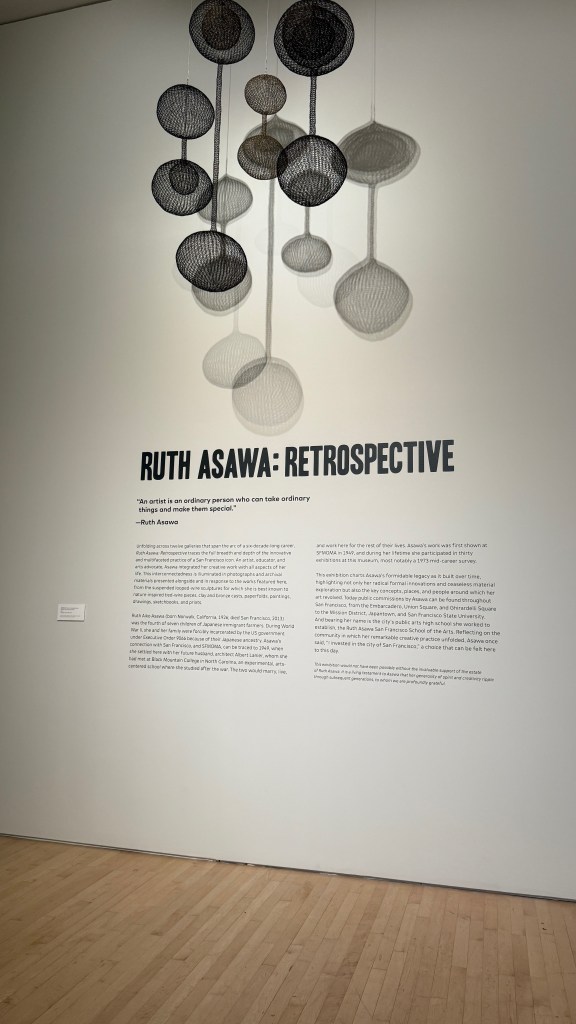
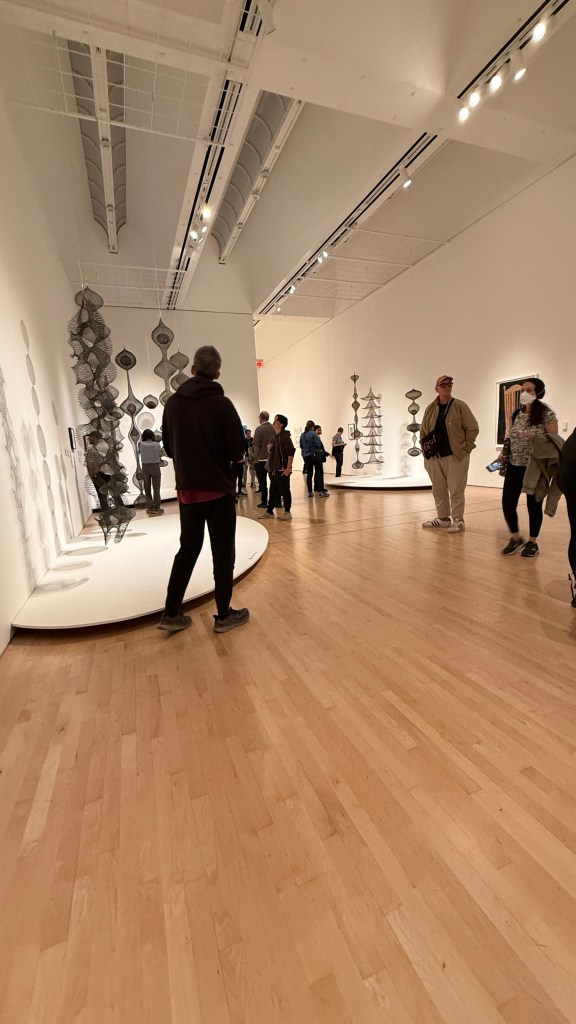
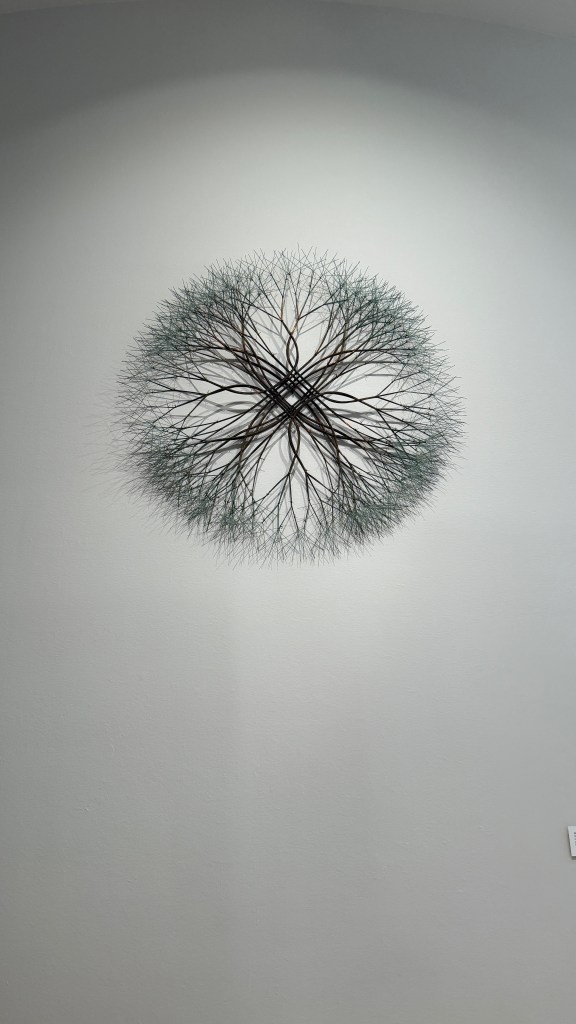
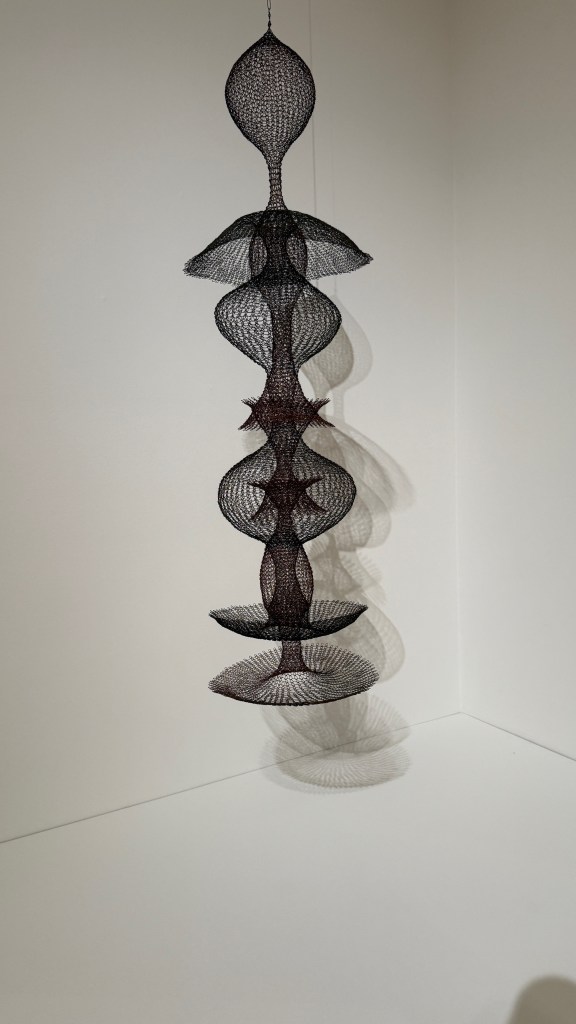
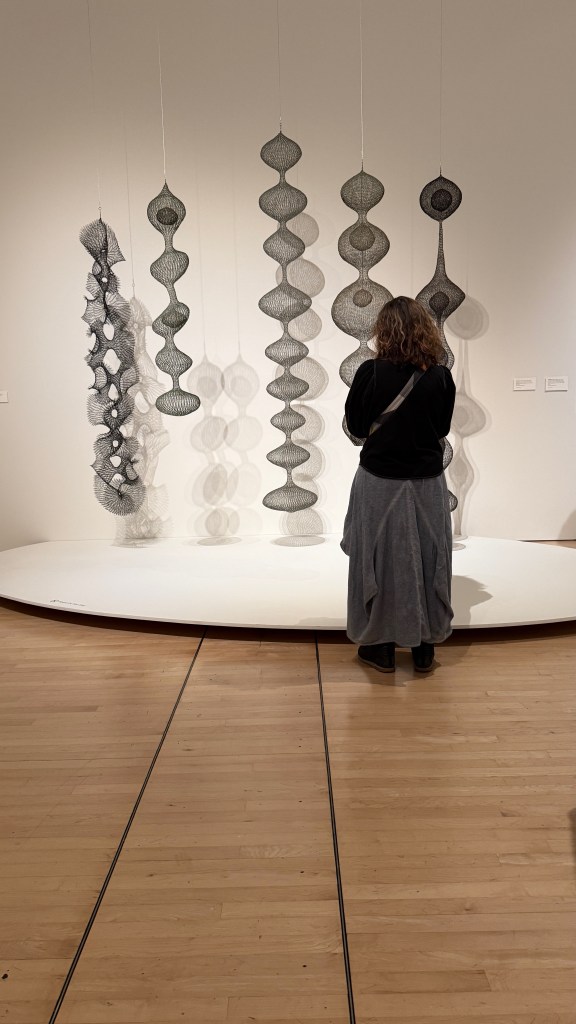
This first posthumous retrospective features the entire spectrum of the artist’s awe-inspiring practice, spanning six decades of relentless experimentation. While Asawa is best known for her mesmerizing looped-wire sculptures—those sinuous, biomorphic forms that seem to breathe and dance in space—the exhibition reveals an artist whose creativity knew no boundaries.
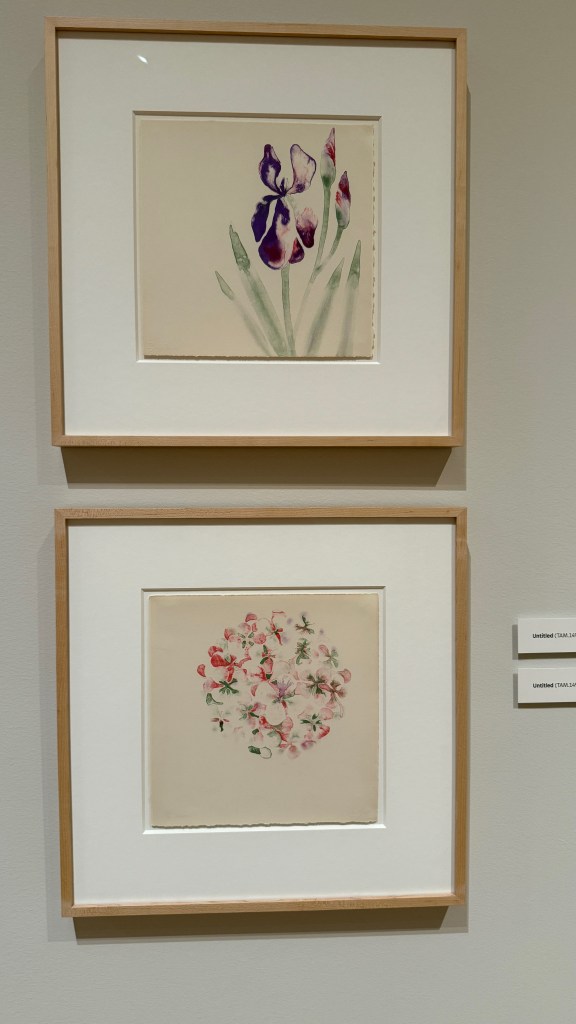
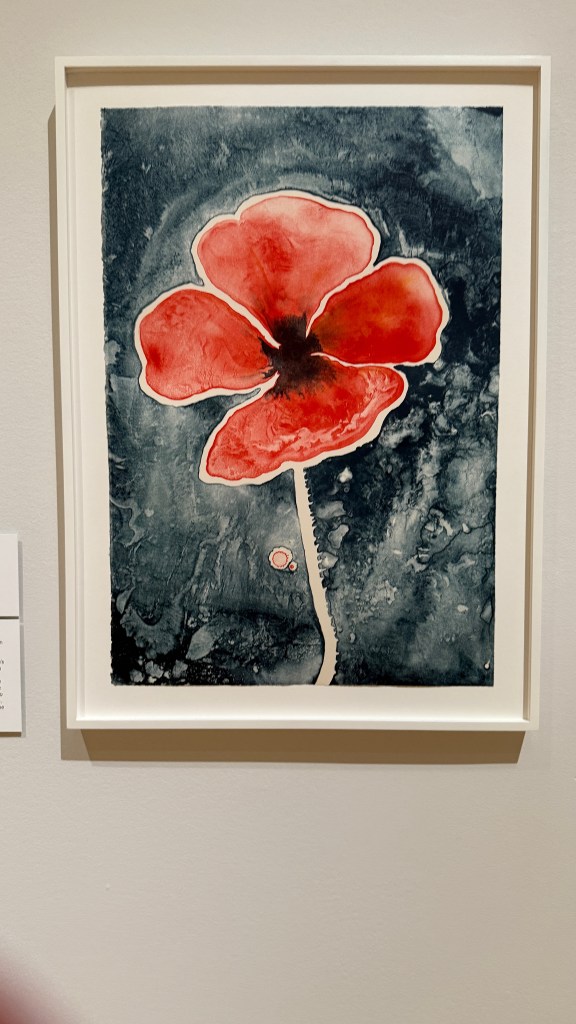
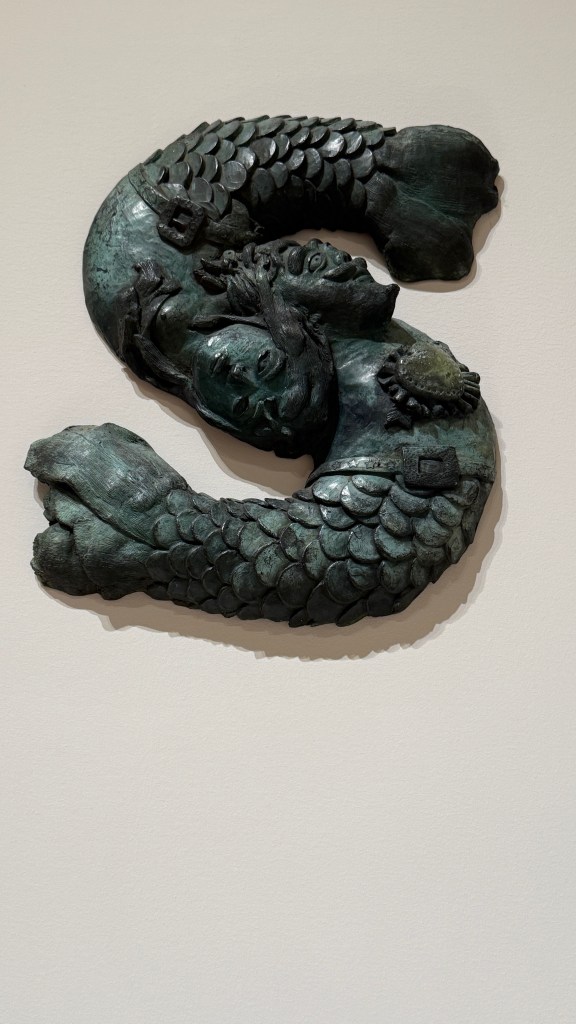
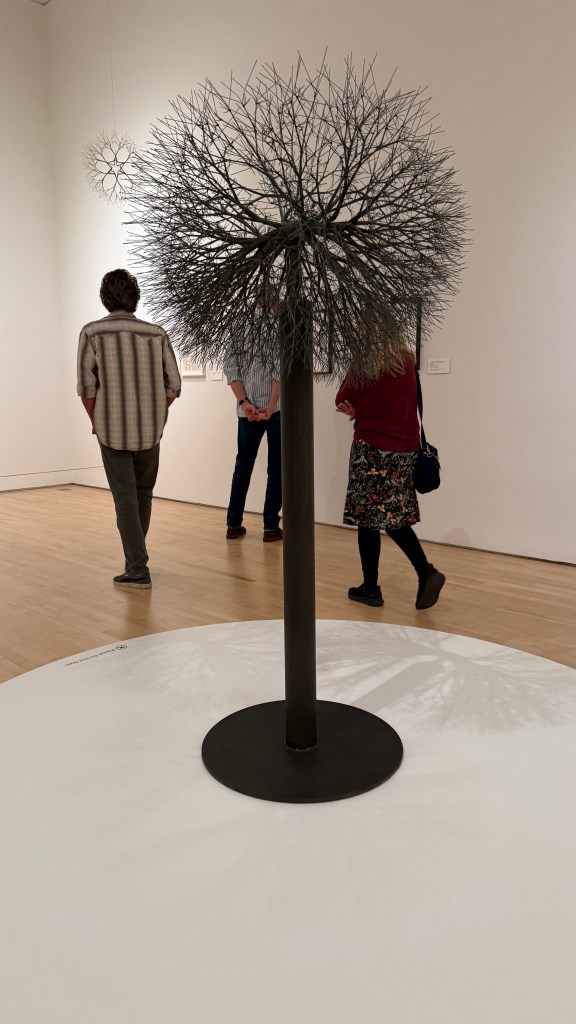
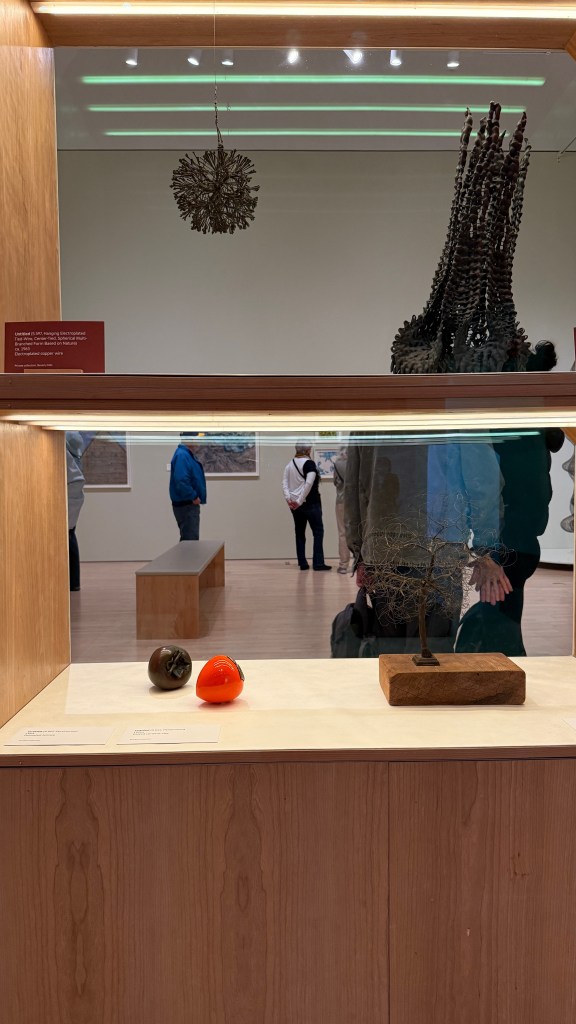
Her signature looped-wire sculptures will share gallery space with lesser-known works in other mediums that supply valuable insight into the interconnectedness and relentlessly experimental nature of her artistic vision. Wandering through the galleries, I was struck by the sheer diversity: delicate paper folds, bold paintings, intricate bronze casts, and hundreds of drawings that reveal an artist constantly observing and documenting the world around her.
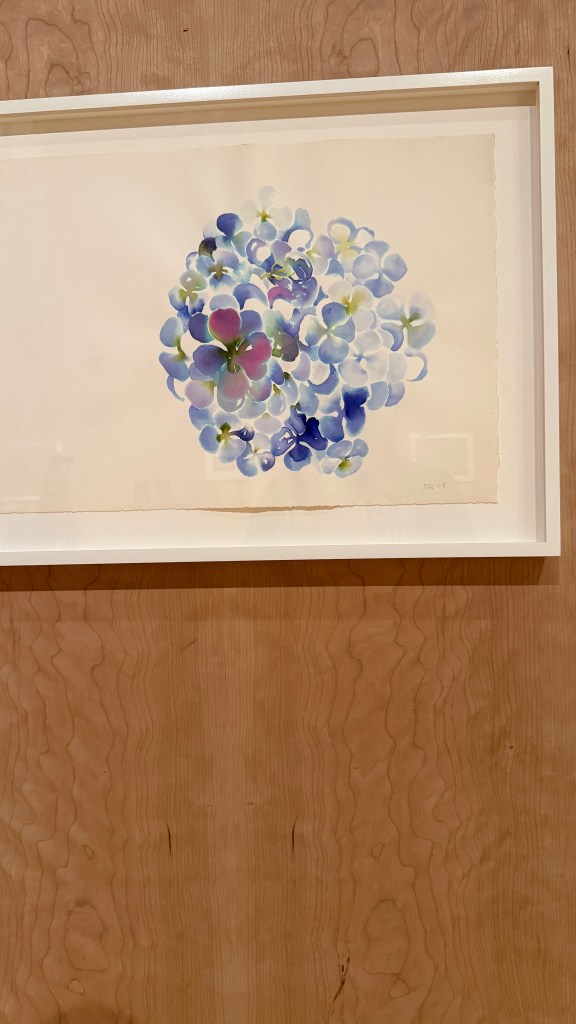
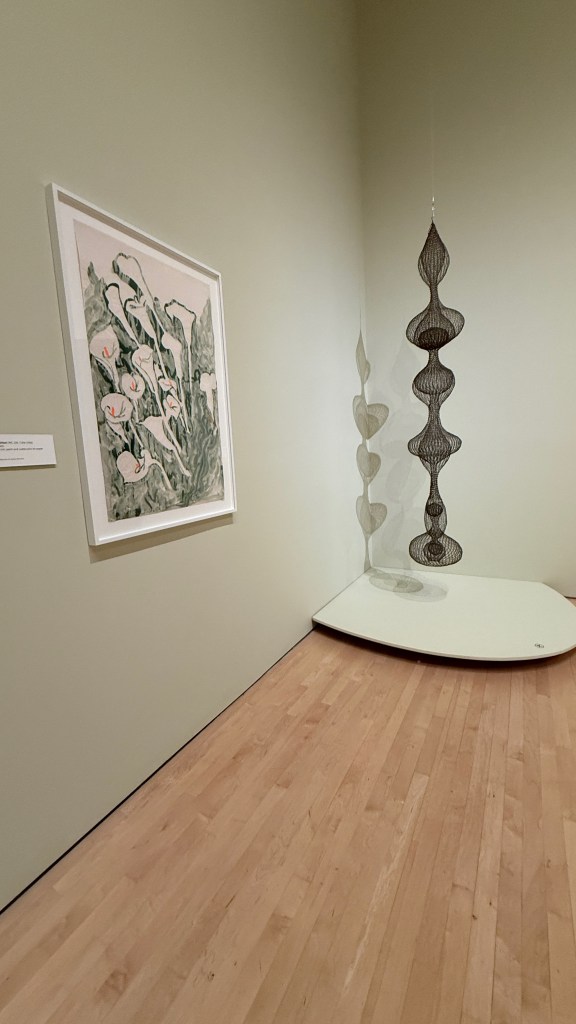
This vast explorations of mediums really surprised me. Her mastery of 2d and 3d art forms was unique. Yet, when you look at the sum of her work there are certainly through lines – like her botanical shapes.
The exhibition’s chronological flow takes you from her student days at Black Mountain College through her mature work in San Francisco. As a teenager during World War II, she and her family were incarcerated in war relocation camps. While interned, she practised drawing with Japanese-American Disney animators. Rather than being broken by this traumatic experience, Asawa seemed to channel it into a philosophy of finding beauty and possibility in unlikely circumstances.
The Living Room That Changed Everything
One of the exhibition’s most innovative features is a gallery that recreates the living room of Asawa’s Noe Valley home, complete with her hand-carved redwood doors and wire sculptures suspended from the ceiling exactly as they were in her domestic space. The exhibition features a gallery evoking the Noe Valley home and studio that was the hub of the artist’s creative and family life for more than half a century, from the early 1960s until her death in 2013.
This isn’t just a nostalgic recreation—it’s a revelation about how Asawa lived her values. There was no line between living a full life and making astonishing art, no limits on inspiration, no place that wasn’t a good place for creation and appreciation. Her children grew up surrounded by art, learning that creativity was a natural part of daily life, not something relegated to special spaces or occasions.
The Garden as Muse and Laboratory
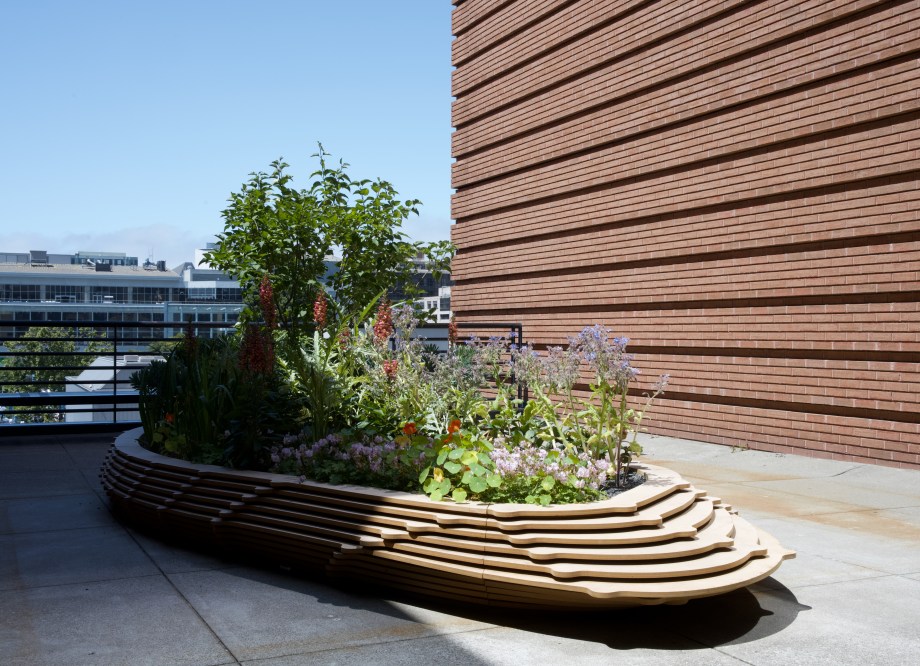
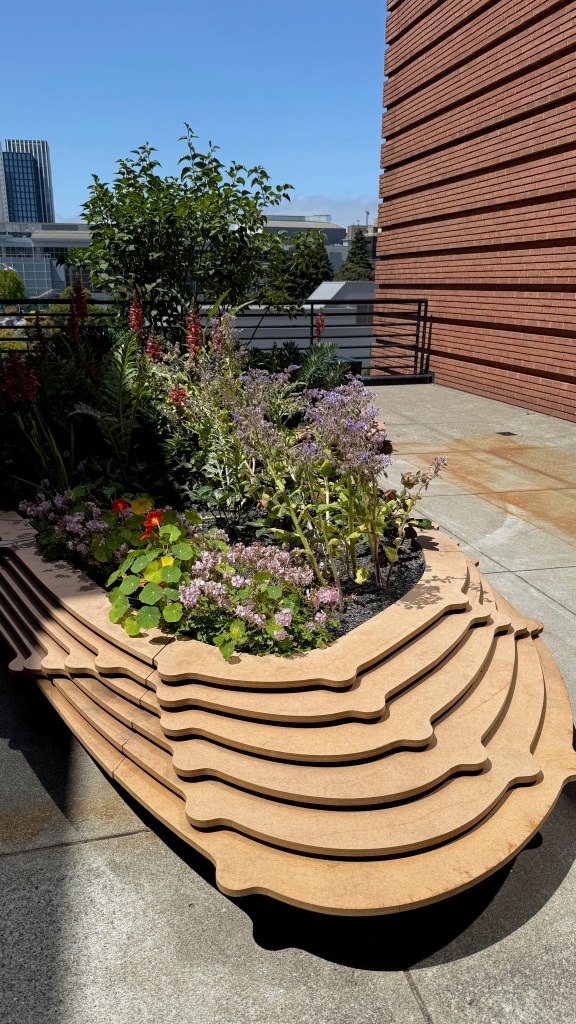
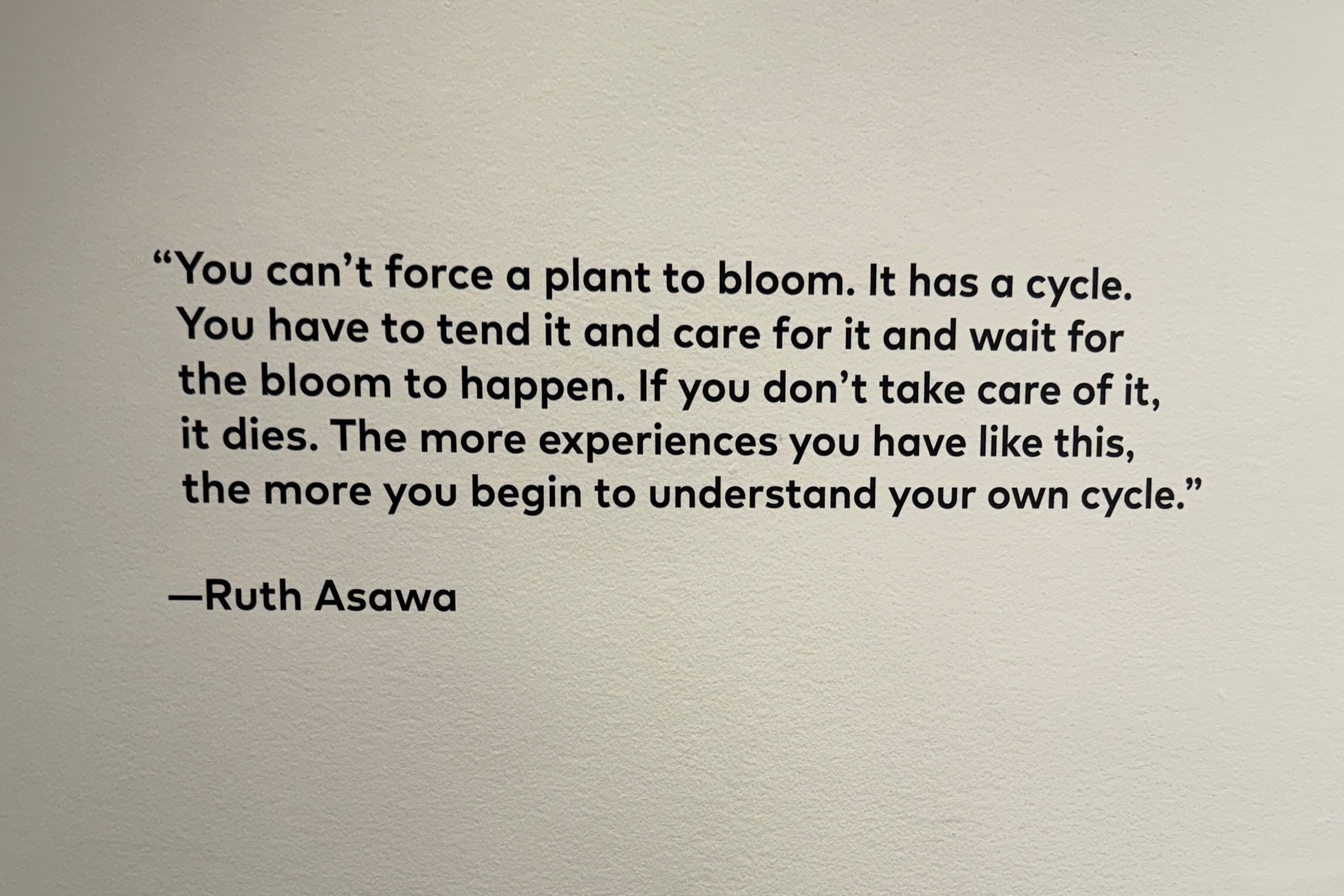
Perhaps the most unique aspect of this retrospective is its inclusion of an outdoor garden component. On SFMOMA’s Floor 4 terrace, adjacent to the exhibition galleries, a community garden will be cultivated throughout the presentation of Ruth Asawa: Retrospective. The garden will showcase Asawa’s commitment to gardening as an educational tool and a way to contribute to sustainable urban environments.
Featuring local native plants, including those that grew in Asawa’s own home garden, this living extension of the exhibition demonstrates how Asawa’s creative practice was deeply rooted in observation of natural forms. The final gallery of the retrospective features stunning late drawings of plants and flowers from the 1990s and early 2000s, showing how her garden continued to inspire her work until the end of her life.
Stepping out onto that terrace, with its sculptural wooden bench and carefully tended plants, you understand that for Asawa, art wasn’t separate from life—it grew from it. As a garden lover, providing this space to pause and reflect on the part of the vast exhibit I had just experienced felt incredibly thoughtful and intentional. After a brief respite I was ready to continue exploring.

Community as Art Practice
What struck me most about this exhibition was how it illuminated Asawa as not just an artist, but as a community builder. She founded the Alvarado School Arts Workshop — now known as the San Francisco Arts Education Project — and helped form the Bayview-based arts education nonprofit, SCRAP. She was instrumental in developing the public high school named in her honor, Ruth Asawa San Francisco School of the Arts.
The exhibition includes documentation of her public artworks throughout San Francisco—fountains that turn urban spaces into places of wonder and contemplation. These aren’t just decorative additions to the cityscape; they’re expressions of her belief that art should be accessible to everyone, not confined to gallery walls.
Technical Innovation Meets Human Touch
Asawa’s technical innovations were remarkable. In 1947, she travelled to Mexico, where she took lessons with local weavers that helped inspire the metal sculptures for which she is best known. She adapted traditional basketry techniques to create three-dimensional forms in wire, developing a completely new sculptural vocabulary.
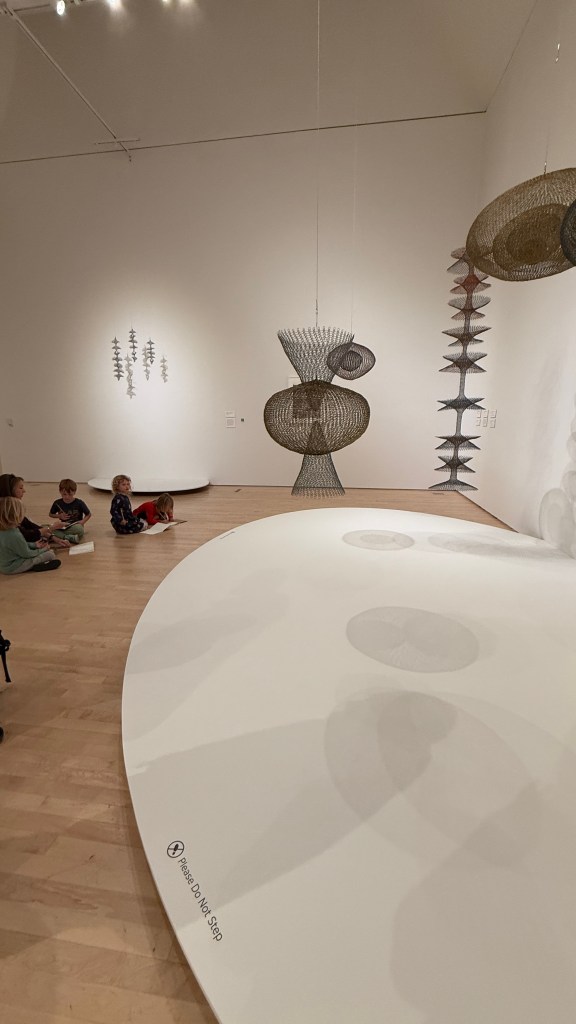
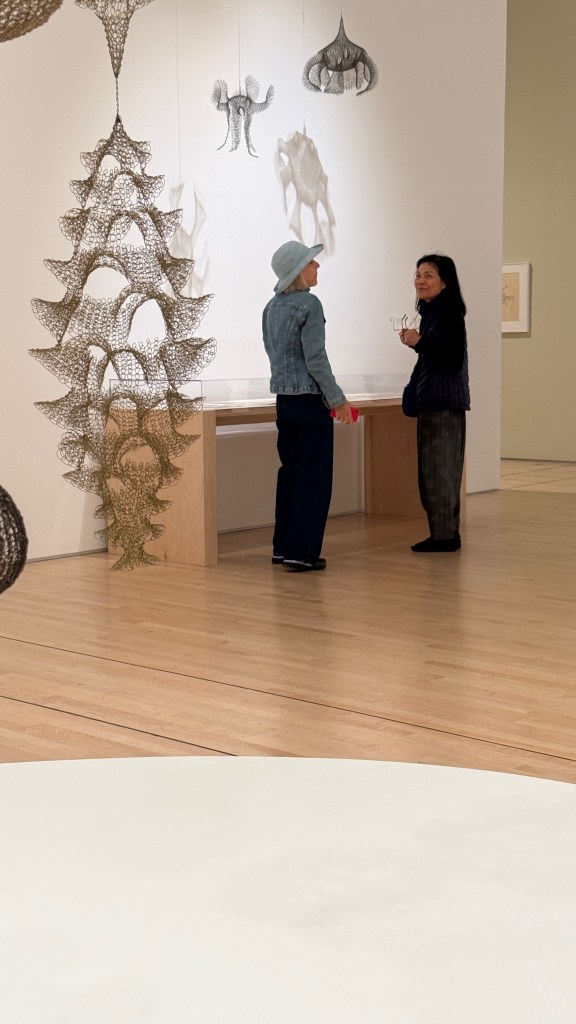
Yet for all their technical sophistication, her wire sculptures feel remarkably human. They cast complex shadows that change throughout the day, creating what amounts to drawn compositions on the walls. Standing among them in the exhibition, you feel their presence—they’re companions rather than objects. The interplay of these shadows from different angles drew me into the pieces in a more meaningful way.


A Retrospective with Perfect Timing
Following its presentation at SFMOMA, the exhibition will travel to The Museum of Modern Art (MoMA), New York (October 19, 2025–February 7, 2026); Guggenheim Bilbao, Spain (March 20–September 13, 2026); and Fondation Beyeler, Riehen/Basel, Switzerland (October 18, 2026–January 24, 2027), with its tour coinciding with what would have been Asawa’s 100th birthday on January 24, 2026.
This timing feels significant. In an era when we’re questioning the role of art in society, when communities feel increasingly fragmented, Asawa’s example offers a different model. She showed that an artist can be deeply experimental while remaining connected to community. Innovation doesn’t require isolation, rather the most profound art often grows from the most ordinary materials and experiences. ❤
Why This Matters Now
Walking through the Asawa retrospective, I kept thinking about her famous quote prominently displayed in the exhibition: “An artist is not special. An artist is an ordinary person who can take ordinary things and make them special.” In our current moment of art world speculation and market-driven valuations, this feels both radical and necessary.
Asawa’s legacy isn’t just in the objects she made—though they’re breathtaking—but in the model she provided for how to live as an artist. She proved that creativity and community support rather than compete with each other, that teaching and learning are reciprocal, and that art can be both experimental and accessible.
The retrospective at SFMOMA runs through September 2, 2025, and it’s worth every minute you can spend with it. But don’t just visit the galleries—step out into the garden, sit on that beautiful wooden bench, and consider how an ordinary person with extraordinary vision changed her city, one sculpture, one student, one community project at a time.
Sometimes the best discoveries happen when you least expect them. Ruth Asawa’s work reminds us that the most profound art doesn’t announce itself with fanfare—it simply invites you to see the world with new eyes.
 restless art syndrome