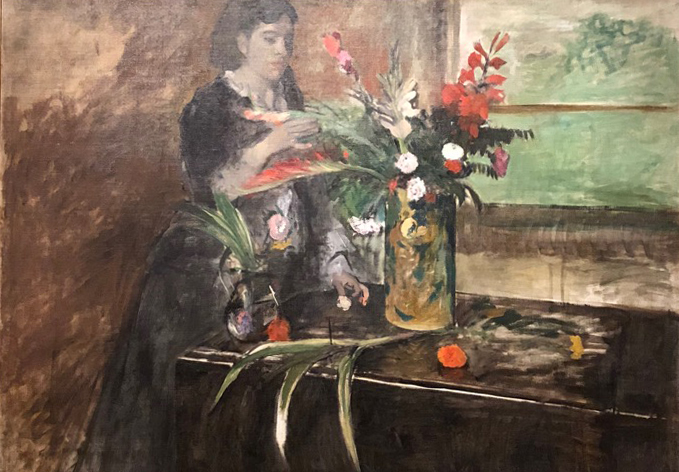
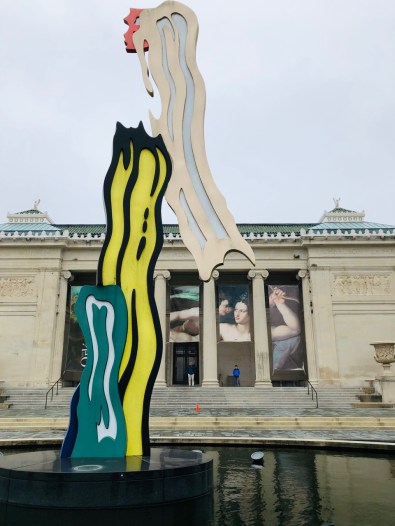
I am an art nerd who has a soft spot for tragic heroines and French Impressionism, so Degas’ Portrait of Estelle Musson Degas was on my “must see” list when I returned to New Orleans recently.
I have been looking to pay a visit to sweet Estelle when I learned of her existence after touring the Degas House when I was in New Orleans in 2014.
French Impressionist Hilaire-Germain-Edgar De Gas better known as Edgar Degas (1834 – 1917) lived in New Orleans with his Creole mother’s side of the family in their home at 2306 Esplanade Avenue in 1872. He was there for only 5 months, but he started 22 paintings and drawings in that time.
One of Degas’ most famous works created in New Orleans (and certainly the one with the most fascinating story) is a portrait of his cousin/sister-in-law Estelle Musson Degas rearranging flowers can be found at the New Orleans Museum of Art.
About Estelle Musson Degas
In a letter Degas wrote of his brother René’s wife Estelle, “He (René) is married and his wife, our cousin, is blind, poor thing, almost without hope. She has borne him two children, she is going to give him a third whose godfather I shall be, and as the widow of a young American killed in the War of Secession she already had a little girl of her own who is 9 years old.”
Estelle Musson’s first husband was Joseph Davis Balfour of N.C. They had a daughter, Estelle Josephine Balfour, who was born a few weeks after the 1862 death of her father in a Tennessee Civil War battle. (Estelle Josephine Balfour died at age 18, in April of 1881.)
Estelle remarried in 1869, Jean Baptiste Rene DeGas, brother of French impressionist painter Edgar DeGas. Estelle suffered from a chronic eye problem that left her blind in both eyes before she was 30. She became the mother of 5 children with Rene Degas, when he left her for a married woman, America Durrive Olivier, who often read to Estelle and was her frequent companion.
Edgar Degas, who also had the same eye condition known as chorioretinitis, identified with his cousin and during his time in New Orleans developed a fondness for her which is evident in the five paintings in which Estelle was the main subject. Degas captured Estelle in such a soft and sensitive manner. In Portrait of Estelle Musson Degas, Degas would watch as Estelle would arrange the flowers by touch and scent.
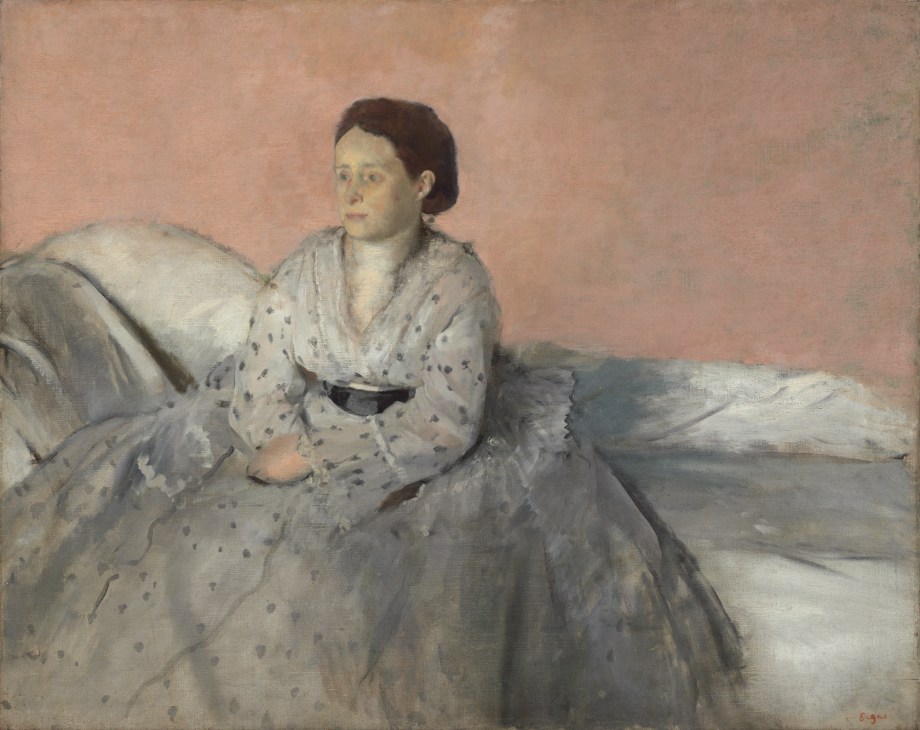
Madame René de Gas
1872/1873 • National Gallery of Art
The devastating betrayal by Rene caused an irreparable rift in the Musson and deGas families and Michel Musson (Estelle’s father) was so outraged by Rene’s actions that he adopted Estelle’s children and changed their last name from deGas to Musson.
Estelle never remarried and died in New Orleans in 1909.
Bringing Estelle Home
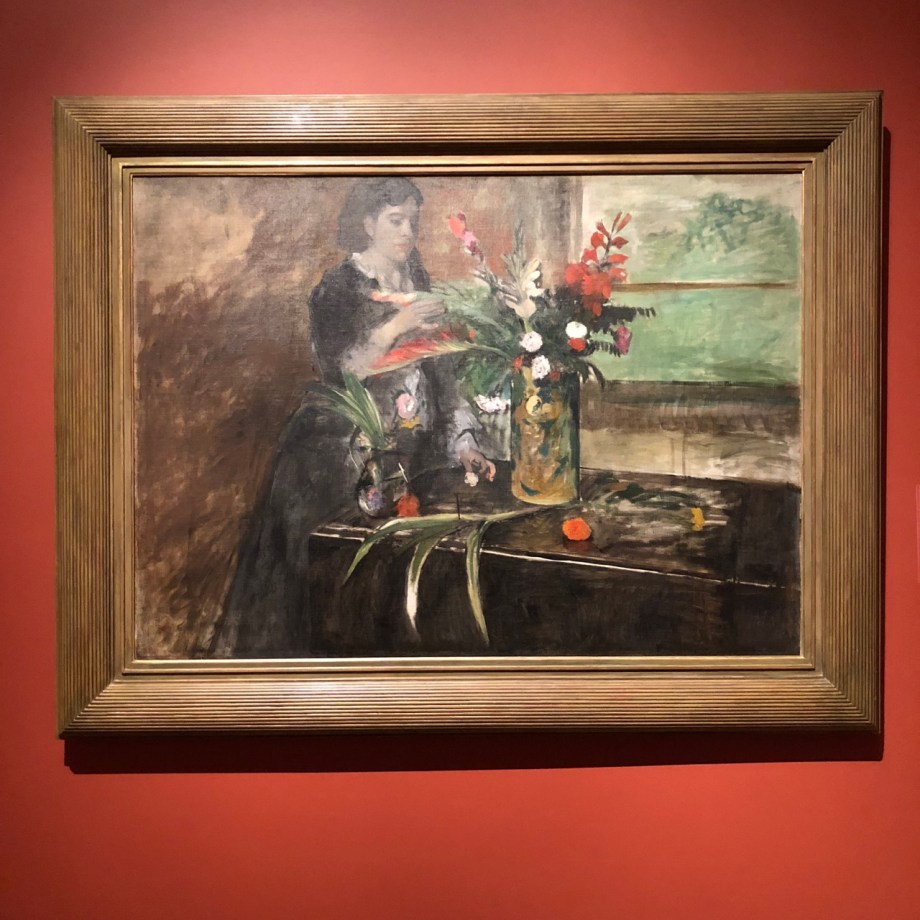 Degas’ Portrait of Estelle Musson Degas painting, along with the other works Degas completed during his stay in New Orleans, went back to France with him and remained in his possession for the rest of his life. After he died, all his New Orleans paintings were sold to various museums and private collections around the world.
In 1962, the New Orleans Museum of Art (then known as the Isaac Delgado Museum of Art) realized this could be their one chance to reclaim a piece of their artistic heritage, and organized a campaign to “Bring Estelle Home.” The whole city got involved, with gala events and bake sales to raise enough money for the museum to buy the painting – even children were involved as they would place their spare change in canisters at school.


The purchase price was $190,000, the equivalent of about $1.4 million today. According to a recent evaluation, it is worth about $14 million
When they finally succeeded, the celebrated the only way New Orleans knows how – with a parade, marching Estelle down Esplanade, past the home where she once lived, all the way until they reached the museum where she hangs today.
In addition to the painting of Estelle, other works by Degas in NOMA’s Impressionist collection include one pastel (Dancer in Green, 1878), three charcoal sketches (Dancer at the Barre; Dancer Tying Her Shoe, 1885; Dancer Tying Her Shoe, undated), and one sculpture (Dancer Adjusting Her Stocking, 1880).
#RememberEstelle

I have to say I found leaving Estelle to be difficult. She was beautiful set upon a crimson wall and I felt the weight of her life. I was really saddened to see there was not more presented to the public about the significance of this work. Many other works in the museum had Snapchat filters and other factoids (including digital displays.) I told my family the story of Estelle and they remarked this info should be somewhere in the museum. I agreed.
There is very little publicly known about Degas’ time in the U.S. and the connection he had to New Orleans. Another painting created during his NOLA visit was The Cotton Office in New Orleans was the first painting by Degas to be purchased by a museum, and the first by an Impressionist. Degas’ sale of the piece marked a turning point in his career as he moved from being a struggling, unrecognized artist to a recognized and financially stable artist.
I share this part of Degas’ life every time I teach my Artist Seminar: Edgar Degas at Middlesex Community College (NEXT SESSION – SPRING 2019: March 15, 3 – 5p, Bedford Campus), but I do wish Estelle was given her due at NOMA. The BRING ESTELLE HOME campaign was such a novel way to get the community involved in art – it should still be celebrated. If you are in NOLA, please stop into NOMA and pay Estelle a visit – you will be happy you did. #RememberEstelle
___________________________________________________________________________________________
To Learn More About Estelle, Degas in New Orleans and his Chorioretinitis
- Two champions of the “Bring Estelle Home.”
- Estelle
- Degas in New Orleans
- Chorioretinitis
 restless art syndrome